segunda-feira, 30 de janeiro de 2017

President Trump and the end of the American Century


It’s inauguration week just as the Framers must have imagined it: citizenry streaming into the capital from every state to celebrate the most sober and symbolic moment in the democracy, even as the soon-to-be president tears into an American hero, fends off criticism from allies, deflects a sexual harassment suit and wails that his public approval ratings are rigged.
This is how the Trump presidency begins, and the American Century ends.
I don’t say this in a way that’s gloomy or hysterical; don’t count me among those who assume the nation is headed off a cliff. (Count me, instead, among those who think the odds of us doing all this again in three years or less are about 50-50.)
I’m only saying that political epochs, like the one into which every one of us was born, have demarcation points that can only be clearly seen in retrospect. And we’re living through one right now.
Any calendar will tell you, for instance, that the 19th century ended in 1901, the year President McKinley was assassinated and Teddy Roosevelt took his place. But most historians would argue that, for any practical purpose, the previous century of British dominance — Pax Britannica and all that — really saw the curtain fall in 1914, at the onset of the First World War.
The empire would hold together for another 30 years after that, give or take, but beginning with the campaign against Germany and its allies, the orchestra was playing Britain off center stage. The costs of planetary preeminence, already a burden in peace, were unsustainable in war.
The 20th century as we think of it probably began about 30 years later, after Franklin Roosevelt solidified American dominance over the western half of a globe riven by ideology. From then on, Washington was at the epicenter of world events, the seat of unrivaled might among free nations.
America was the most expansive country in the world, but whereas Britain had chiefly expanded its physical domain, we expanded our standard of living at a staggering rate. We expanded our markets to much of the world, education to all reaches of the country and — at long last — civil rights to the citizenry.
We expanded the cultural reach of America — movies and sitcoms, soft drinks and sports teams, transcendent celebrity and defiant individualism — to every hamlet on earth where you could string an electrical wire.
But just as the British Empire strained to maintain its momentum in the decades leading up to World War I, so too did our vast expansion run up against the boundaries of time and technology.
Globalism, made possible by cheaper technologies and transportation, gave rise to competitors, even as automation made our own workers redundant. Factory towns cratered. The price of maintaining global hegemony, both in lives and in credit, became harder to justify.
Government continued to grow, but now so did the chasm between the rich and everyone else.
Still, well into the 21st century, the nation’s political establishment clung tenaciously to this ideal of an essential, expansive America. It was at the heart of George W. Bush’s calamitous adventure in Iraq and of his party’s bid to create a new federal program for prescription drugs. It was the vision behind Barack Obama’s health care plan, his pact with Iran and his failed effort to forge a new market in Asia.
And it’s precisely what Donald Trump’s election repudiates.
Trump has said all kinds of conflicting things about almost everything; I expect he’ll contradict himself a half dozen times on the Capitol steps alone. But in this one respect he has been faithful: He believes the time has come for withdrawal and isolation, rather than expansion and globalism.

Gunmen open fire on mosque in Quebec City, Canada


SIX people were killed and eight wounded in what politicians are calling a terrorist attack, where two gunmen opened fire in a mosque in Canada during evening prayers.
According to witnesses cited by Radio-Canada, two men entered the Québec City Islamic Cultural Centre and opened fire on more than 50 worshippers inside.
One was armed with an AK-47, a prohibited weapon, La Presse reported.
A witness, who asked to remain anonymous, told CBC’s French-language service Radio-Canada that two masked individuals entered the mosque.
“It seemed to me that they had a Quebecois accent. They started to fire, and as they shot they yelled, ‘Allahu Akbar!’ The bullets hit people that were praying. People who were praying lost their lives. A bullet passed right over my head,” said the witness.
“There were even kids. There was even a three-year-old who was with his father.”
Hamid Nadji, speaking to a friend who was inside the mosque, told the Montreal Gazette the scene was a “carnage.”
“From what we heard over the phone, one person had a weapon discharged in his face because he had wanted to jump on the man to stop him. And three others died because they wanted to catch the man,” Nadji said.
One of the gunmen left the mosque to reload and came back. He then ran out of bullets a second time, reloaded and returned for a third round of shooting, Nadji told the Gazette.
Two people have been arrested over the shooting, a Québec police spokesman said, and remain in custody. One was apprehended after a chase that ended near l’île d’Orléans, near the bridge which connects the island to the mainland.
Quebec provincial police spokeswoman Christine Coulombe said that some of the wounded were gravely injured. She said the deceased were approximately 35 to 70 years of age. Thirty-nine people were unharmed. More than 50 were at the mosque at the time of the attack.
Québec Premier Philippe Couillard said in French on his Twitter account that the mosque attack was an “act of terrorism”.
“Québec categorically rejects this barbaric violence. Our solidarity is with victims, the injured and their families,” Couillard said, adding that police were making their priority to fight “terrorism” to ensure the safety of its people.
Quebec City Islamic Cultural Centre President Mohamed Yangui reported the number of dead late Sunday in a telephone call from the provincial capital.
Yangui said the shooting happened in the men’s section of the mosque. He said at least five males had died and he worried that some were children. He said he wasn’t at the centre when the attack occurred.
Quebec Provincial Police later stated the death was six, with eight wounded.
“We are sad for the families,” Yangui said.
Canadian Prime Minister Justin Trudeau and Quebec Premier Philippe Couillard characterised the attack as a terrorist act.
“We condemn this terrorist attack on Muslims in a centre of worship and refuge,” Trudeau said in a statement.
“While authorities are still investigating and details continue to be confirmed, it is heart-wrenching to see such senseless violence. Diversity is our strength, and religious tolerance is a value that we, as Canadians, hold dear.
“Muslim-Canadians are an important part of our national fabric, and these senseless acts have no place in our communities, cities and country. Canadian law enforcement agencies will protect the rights of all Canadians, and will make every effort to apprehend the perpetrators of this act and all acts of intolerance.”
Earlier, police put up a security perimeter around the mosque and declined to comment to reporters about the incident.
“Why is this happening here? This is barbaric,” said the mosque’s president, Yangui said.
“I managed to talk to people inside. They told me there were at least five deaths and that the person managed to reload his weapon at least three times.”

Sickening discovery as father finds six bodies in a garden, including those of his own children


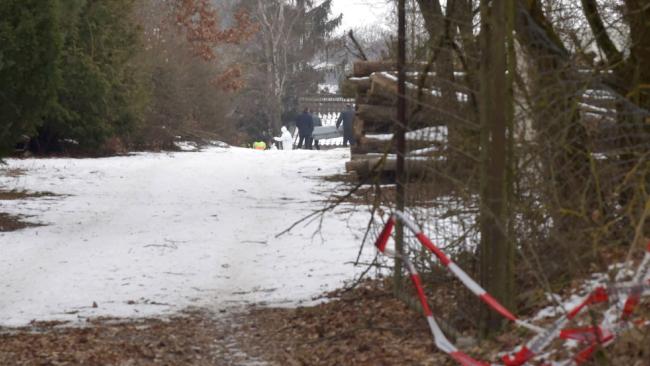
A FATHER worried about his children has discovered the bodies of six teenagers, including his own, in a shed in the German town of Arnstein in Bavaria.
The group of men and women were between the ages of 18 and 19 and had met up the previous evening apparently for a party in the shed on the remote plot of land.
As he hadn’t heard from his children by morning, the father went to the site — which belongs to the family — to check if everything was alright. He found the bodies of his children and their friends in the hut, police said, and called emergency services.
The fire brigade and a physician were rushed to the site, but the teenagers were already dead.
Police said the cause of death was unclear, but there was no evidence of a violent crime.
n the building there was a wood-fired heater that had previously been lit, leaving open the possibility that carbon monoxide poisoning could have killed the youths.
“There are many other possibilities, and this is clear speculation,” said the authorities in the Lower Franconia district, east of Frankfurt.
An autopsy to confirm the cause of death could take several days.


Protesters block a road during a demonstration against the immigration ban in LA and WASHINGTON


Attorneys struggled to determine how many people had been affected so far by the rules, which Trump said were “working out very nicely.”
But critics described widespread confusion and said an untold number of travellers were being held in legal limbo because of ill-defined procedures. Others were released. Yet others report being pressured to sign waivers surrendering their green card status.
REPUBLICAN RUCKUS
Earlier, Mr Trump launched an attack on two key Republican senators who have expressed alarm at the chaos caused by his executive order banning and deporting immigrants.
He has taken to twitter to express his anger at Republican Senators John McCain and Lindsey Graham.
“They are sadly weak on immigration,” Trump asserted. “Senators should focus their energies on ISIS, illegal immigration and border security instead of always looking to start World War III”.
Republican Senators John McCain and Lindsey Graham had earlier lashed out at Trump’s executive order on immigration, saying it “will become a self-inflicted wound in the fight against terrorism.”
“Our most important allies in the fight against ISIL are the vast majority of Muslims who reject its apocalyptic ideology of hatred,” the senators said in a joint statement.
“This executive order sends a signal, intended or not, that America does not want Muslims coming into our country. That is why we fear this executive order may do more to help terrorist recruitment than improve our security.”
McCain also questioned the appointment of Trump campaign strategist, and former alt-right Breitbart website executive Steve Bannon to the National Security Council.
“I am worried about the National Security Council. Who are the members of it and who are the permanent members? The appointment of Mr Bannon is something which is a radical departure from any National Security Council in history,” McCain told CBS.
“The role of the chairman of the Joint Chiefs of Staff has been diminished, I understand, with this reorganisation. The one person who is indispensable would be the chairman of the Joint Chiefs of Staff, in my view,” McCain said of Dunford. “So it’s of concern, this ‘reorganisation.”
“As the chief legal officers for over 130 million Americans and foreign residents of our states, we condemn President Trump’s unconstitutional, un-American and unlawful Executive Order,” read the statement.
The attorneys general pledged to “work together to ensure the federal government obeys the Constitution, respects our history as a nation of immigrants and does not unlawfully target anyone because of their national origin or faith.”
Noting that several federal courts had already blocked parts of Trump’s order, the attorneys general said they would “use all of the tools of our offices to fight this unconstitutional order and preserve our nation’s national security and core values.”
They also predicted the courts would ultimately strike down the order.
“In the meantime, we are committed to working to ensure that as few people as possible suffer from the chaotic situation that it has created,” the statement said.

Australia in talks with US on dual nationals over Donald Trump’s seven-country Muslim ban


SEARCH engine giant Google has launched its largest crisis campaign in the wake of US President Donald Trump’s immigration ban.
Google has created a $US2 million ($A2.6 million) crisis fund that can be matched with up to $US2 million ($A2.6 million) in donations from employees, totalling $US4 million ($A5.3 million), for four organisations: the American Civil Liberties Union, Immigrant Legal Resource Center, International Rescue Committee and UNHCR.
Separately, company executives are also giving money individually to the cause.
The campaign was disclosed in a memo sent by Google CEO Sundar Pichai and confirmed by a Google spokeswoman, USA Today reports.
Executives at Apple, Microsoft, Netflix, Uber, Airbnb and Tesla Motors have also denounced the policy, which was temporarily stalled by a federal judge in New York.
Starbucks Corp Chief Executive Officer Howard Schultz has also that the company planned to hire 10,000 refugees over five years in 75 countries, two days after President Trump’s executive order banned refugees from certain countries.

domingo, 29 de janeiro de 2017

Next stop: A holiday home on Mars


The concept of moving to Mars is not as far fetched as it sounds. One American professor has been working with NASA since 2011 to facilitate robot-controlled 3-D printing on Mars. His inventions aim to lay the groundwork for future galactic civilizations. Here's a look at what's out there.

Ikea flat-pack refugee shelter named 2016 Design of the Year


A flat-pack refugee shelter developed by Ikea and the United Nations has been named the best design of 2016.
Awarded the Beazley Design of the Year award, presented by the Design Museum in London, the modular Better Shelter is made from recyclable plastic, comprises only 68 components, and can be assembled in as few as four hours.
Each structure is large enough to house a family of five, and includes a solar panel to power lights and charge devices. Since production started in 2015, 16,000 units have been delivered to countries around the world including Iraq, Djibouti, Greece and Niger, to be used as homes, temporary clinics and offices.
"Better Shelter tackles one of the defining issues of the moment: providing shelter in an exceptional situation whether caused by violence or disaster," said juror Jana Scholze, an associate professor of curating contemporary design at Kingston University, in a statement.
"Providing not only a design, but secure manufacture as well as distribution makes this project relevant and even optimistic. It shows the power of design to respond to the conditions we are in and transform them."
The shelter triumphed over more eye-catching nominees, including an Adidas running shoemade of recycled plastic retrieved from the ocean; Grafton Architects' Universidad de Ingeniería y Tecnología building in Lima, Peru, which won the 2016 RIBA International Prize; and Herzog & de Meuron's new addition to London's Tate Modern.
his isn't the first time that social impact has won out over glamour for the top prize.
Last year, a microchip-like device that can mimic the functions of human organs beat out Google's self-driving car, Fondation Louis Vuitton's Frank Gehry-designed museum, and a Star Wars-inspired runway collection by Rodarte, among other entries.
A coffee cup designed for use aboard spacecrafts, David Bowie's "Blackstar" cover, and a smart bicycle helmet were among the other designs honored this year, winning their individual categories.
All nominated projects are on display at the Design Museum until February 19, 2017.

Roger Federer beats Rafael Nadal in Australian Open final for 18th major


Even for the legendary Roger Federer, this was -- nearly -- unbelievable.
After missing the second half of last season with a knee injury, the Swiss star came back in style by winning the Australian Open Sunday and turning the tables on nemesis Rafael Nadal with a gripping 6-4, 3-6, 6-1, 3-6, 6-3 victory in just over 3 1/2 hours.
    The clash marked an extraordinary comeback for the duo, both of whom have battled recent injuries and are now older than most of their opponents.
    "I don't think either one of us believed we were going to be in the finals at the Australian Open... four, five months ago, and here we stand in the finals," Federer said.
    But Federer was obviously much the happier.
    "This is beautiful, but it's still much better, the (other) trophy," Nadal said as he looked glumly at the runner-up trophy.
    Federer wept when losing to Nadal in the 2009 Australian Open final in five sets. This time he cried tears of joy and vowed to celebrate deep into the morning.

    26-shot rally

    "We're going to party like rock stars," Federer said.
    Never in his "wildest dreams" did the Swiss even expect to make the final, especially since he was handed a tough draw. So what was the 35-year-old -- the second oldest man behind Ken Rosewall to win a major in the Open Era -- thinking when bagging his record-extending 18th major and first since Wimbledon in 2012?
    He compared the win in importance to the 2009 French Open when he claimed the clay-court major for the first and only time. Nadal was the man who had habitually stopped him in Paris.
    "I waited for the French Open," he said. "I tried. I fought. I tried again and failed. Eventually I made it. This feels similar."
    Federer had to do it the hard way, too, rallying from 3-1 down in the fifth. He rarely takes medical timeouts but did so entering the fifth set against Stan Wawrinka in the semifinals and at the same stage versus Nadal.
    It was for the same issue, an upper leg complaint.
    Yet he consistently threatened on the Nadal serve and finally got his reward for 3-3 -- after Nadal's forehand on game point clipped the tape and went wide.
    In a game highlighted by a 26-shot rally that Federer won with a blistering forehand down the line, he broke again for 5-3 when a good, angled backhand return forced an error. That after Nadal dug out of 0-40 to get to deuce.
    But there was still drama to come.
    In the last game, Federer fended off two break points with an ace and forehand winner. On a second match point his forehand cross-court was close to the line but ruled good. A challenge came from Nadal and the crowd roared when replays showed the ball to be touching the line.
    It was, truth be told, an anticlimactic conclusion as Federer had to wait before finally celebrating. The two subsequently hugged and exchanged words at the net.
    "It's slightly awkward to win this way," said Federer. "Nevertheless emotions poured out of me. Of course I was seeing my entire support team, (wife) Mirka going bananas. It was cool."
    Even if the hard courts and balls were quicker this year at the Australian Open -- aiding Federer's aggressive, flat-hitting game -- all the numbers suggested Nadal held the edge in the 35th installment of what many consider to be the best men's tennis rivalry of all time.
    Nadal hadn't lost to Federer at a grand slam since Wimbledon in 2007. He was 7-2 in grand slam finals against his friend and 23-11 overall.

    Huge implications

    Perhaps Nadal's five-hour semifinal win over Grigor Dimitrov drained the 30-year-old. He indeed hinted as much.
    Newly elected Hall of Famer Andy Roddick said last week the tussle might be the most important in men's grand slam history. If Nadal had prevailed, he'd have been only two majors shy of Federer.
    But now the gap has widened to four, seemingly too much for Nadal to overcome even with his resurgence in Melbourne.
    Nadal is always one to dwell on the positive and he said he'll walk away from Melbourne in good spirits, despite Sunday's reverse.
    "I believe that if I have my body in the right conditions, I can have a great year because I feel I am playing well," said Nadal, who was bidding for a first major since 2014.
    Whereas Federer dealt with the knee issue last year, most of Nadal's year was blighted by a wrist problem.
    Prior to the defeat to Federer, Nadal snapped a three-match losing streak in fifth sets and gained morale boosting victories over the likes of Dimitrov, Wimbledon finalist Milos Raonic and the German with immense potential, Alexander Zverev.
    "I am with big personal satisfaction," said Nadal. "I cannot say I am sad."
    Federer's win over Nadal, meanwhile, was his fourth top-10 scalp of the event.
    As Nadal took control of the match in the fourth, playing his best tennis, it almost didn't happen.
    Nadal's forehand, however, was highly inconsistent and lacked depth, which may have been tied to fatigue.
    "The shots didn't penetrate like they did before," Heinz Gunthardt, the former coach of Steffi Graf and an analyst for Swiss TV, told CNN. "Especially the forehand, there was nothing on it at times. Way too much spin.
    "Honestly I thought Roger was going to win it even when he was behind 3-1 in the fifth. It was Roger that was dictating play."
    Nadal was set to pounce early in the third but the first two games of the set proved eventful.
    Federer led 40-0 on serve, only to face not one, not two, but three break points. On all three he slammed aces out wide. Aces would dig Federer out of trouble on at least half a dozen break points.

    Key third set

    Sagging, Nadal was broken in the ensuing game when Federer pounced on a return to force a forehand error. And unlike Federer -- who hit 20 aces -- Nadal wasn't able to get much help from his serve. He countered with four aces.
    Federer's backhand -- his weaker wing often targeted by Nadal -- more than held up, too, including in the fifth. Eight of his 14 backhand winners came in the decider.
    "Before the fifth he also hit it incredibly," co-coach Severin Luthi told a group of reporters. "I think here we can play like that, the court the way it is."
    The last time two players over 30 played in a men's grand slam final was at the 2002 US Open, a swansong in another epic rivalry, between Pete Sampras and Andre Agassi.

    Morocco to get Africa's first high-speed train


    The first high-speed trains in Africa are flashing along the Atlantic coast of Morocco.
    The French-made double-decker TGVs are being tested ahead of the launch of a flagship new line connecting Tangier with Morocco's economic capital Casablanca in 2018.
      The new trains can reach speeds of 200 miles per hour. They will cut the journey time between the two cities by more than half -- to just over two hours. This is double the speed of South Africa's Gautrain, launched in 2012, which falls short of the criteria for high-speed rail.
      The $2 billion project has been in development for a decade, funded by the governments of Morocco, France, Saudi Arabia, Kuwait, and the UAE.
      King Mohammed VI and the Moroccan government expect the trains to deliver wealth and prestige for the country. But opponents claim they are an expensive folly.

      Speculate to accumulate

      High-speed trains fit within a wider program of infrastructure spending in Morocco, including the world's largest solar power plant and several major ports, that is intended to stimulate a sluggish economy.
      "The Government is continuing its reforms and major investments to improve the business climate and attract foreign investors," reported the African Development Bank in its "Economic Outlook 2016" for Morocco.
      The Tangiers-Casablanca route is expected to generate a sharp increase in passenger numbers that will boost tourism, support wider economic growth in the cities, and recoup the investment on it.
      "We aim at six million passengers a year after three years of commercial operation, instead of three million currently," said Mohamed Rabie Khlie, director general of national rail operator ONCF, in a recent interview with Le Monde. "This should enable us to achieve an operating margin that far exceeds that of conventional trains and will justify the development."
      The director general went on to add that growing passenger numbers had caused "saturation of the network," making the new line a necessity.
      He denied that an upgraded service would lead to high costs for passengers.
      "We will run trains intended for Moroccans and thus adapted to the purchasing power of Moroccans," said Khlie. "We do not want a train reserved for high-end customers."

      Speculate to accumulate

      High-speed trains fit within a wider program of infrastructure spending in Morocco, including the world's largest solar power plant and several major ports, that is intended to stimulate a sluggish economy.
      "The Government is continuing its reforms and major investments to improve the business climate and attract foreign investors," reported the African Development Bank in its "Economic Outlook 2016" for Morocco.
      The Tangiers-Casablanca route is expected to generate a sharp increase in passenger numbers that will boost tourism, support wider economic growth in the cities, and recoup the investment on it.
      "We aim at six million passengers a year after three years of commercial operation, instead of three million currently," said Mohamed Rabie Khlie, director general of national rail operator ONCF, in a recent interview with Le Monde. "This should enable us to achieve an operating margin that far exceeds that of conventional trains and will justify the development."
      The director general went on to add that growing passenger numbers had caused "saturation of the network," making the new line a necessity.
      He denied that an upgraded service would lead to high costs for passengers.
      "We will run trains intended for Moroccans and thus adapted to the purchasing power of Moroccans," said Khlie. "We do not want a train reserved for high-end customers."

      Trump executive order: White House stands firm over refugee crackdown

      The Trump administration is standing firm over its ban on refugees from seven countries despite court rulings and mass protests against the move.
      Mr Trump tweeted the US needed "extreme vetting, NOW". His chief of staff said only 109 people, out of 325,000 travelling, had been detained.
      A number of judges ruled on the issue - one federal judge temporarily halted the deportation of visa holders.
      There has been condemnation from countries around the world.
      Mr Trump's executive order, signed on Friday, halted the entire US refugee programme for 120 days, indefinitely banned Syrian refugees, and suspended all nationals from seven Muslim-majority countries for 90 days.
      Those who were already mid-flight were detained on arrival - even if they held valid US visas or other immigration permits.
      Thousands gathered at airports around the country to protest on Saturday, including lawyers who offered their services for free to those affected.
      Further demonstrations are expected on Sunday - including one outside the White House.

      Who is affected by the ban?

      All travellers who have nationality or dual nationality of Iran, Iraq, Libya, Somalia, Sudan, Syria and Yemen are not permitted to enter the US for 90 days, or be issued an immigrant or non-immigrant visa.
      This includes those who share dual nationality with allied countries, including the UK, although Canada has been told its dual nationals are not affected.
      White House Chief of Staff Reince Priebus said US green-card holders would also not be affected, although he admitted to NBC's Meet the Press programme that they could be subject to greater questioning at airports.
      Regarding those held at airports, he said: "Most of those people were moved out. We've got a couple of dozen more that remain and I would suspect that as long as they're not awful people that they will move through before another half a day today."
      He said the seven countries had been chosen because they had already been identified by Congress and the Obama administration as the most likely to harbour terrorists, and did not rule out the fact that more countries could be added to the list.
      Some leading Republicans expressed concern.
      John McCain called it a "very confusing process" which would "probably, in some areas, give ISIS [Islamic State group] some more propaganda", while Senate Majority Leader Mitch McConnell said it was important to remember that "some of our best sources in the war against radical Islamic terrorism are Muslims".
      Democrats Senate Majority leader Chuck Schumer said the US now appeared "less humanitarian, less safe, less American" and said the Democrats would introduce legislation to overturn it.

      Fear, uncertainty and small acts of rebellion at Dulles airport


      Ali worked for three years as an interpreter for the US Army and gained admittance to the US through a Special Immigrant Visa, reserved for Iraqi and Afghan nationals who face threats of violence for working for Americans during the conflicts there.
      He now has a green card, and returned to Iraq for his father's funeral, only to be delayed for hours for questioning at Dulles.
      "We are not terrorists. We are not bad people," said Ali. "It's so hard. I hope they will change their minds on this position."

      Judges have their say

      Late on Saturday, federal Judge Ann Donnelly, in New York, ruled against the removal from the US of people with approved refugee applications, valid visas, and "other individuals... legally authorised to enter the United States".
      The emergency ruling also said there was a risk of "substantial and irreparable injury" to those affected.
      She was ruling on a case brought by the American Civil Liberties Union (ACLU) on behalf of two Iraqi men with links to the US military who were detained at JFK Airport in New York.
      Both have now been released. Another court hearing is set for February.
      Elsewhere in the US:
      • An order issued in Virginia banned, for seven days, the deportation of green card holders held at Dulles Airport and ordered the authorities to allow access to lawyers
      • Seattle judge issued an emergency stay of removal from the US for two people
      But the Department of Homeland Security said it would continue to enforce the measures.

      Opening salvo in a protracted battle - analysis by Anthony Zurcher, BBC News, Washington DC

      These rulings are only the opening salvo in what will likely be a protracted legal battle, as the Trump administration forges ahead with its plans.
      The episode has made the White House look amateurish and ill-prepared, however, and Republicans in Congress are getting nervous.
      During the presidential primaries, a majority of Republican voters backed Mr Trump's calls for a sweeping ban on Muslims entering the US. During the general election, he campaigned on a visa ban for certain "terrorist" countries - and won.
      So it shouldn't come as much of a surprise if the president's core support holds firm after this weekend's events. The views in the American heartland, far removed from major international airports, sometimes differ greatly from the liberal bastions on the coast.
      However, protracted airport detention of children and the elderly is "bad optics" - and could make it harder for the White House to get public support for future immigration action.

      Countries react with alarm

      Criticism of Mr Trump's decision has been growing louder outside the US.
      Iran and Iraq are threatening a reciprocal ban on US citizens entering the country.
      Chancellor Angela Merkel of Germany said "even the necessary, determined fight against terrorism does not justify placing people of a certain origin or belief under general suspicion".
      Canadian Prime Minister Justin Trudeau tweeted that his government remained committed to welcoming "those fleeing persecution, terror and war".
      A spokesperson for UK PM Theresa May said she "did not agree" with the restrictions, and French independent presidential candidate Emmanuel Macron tweeted: "I stand with the people fleeing war and persecution".